
How Much Breast Milk Should a Baby Eat? (By Age)

Rebecca Harrison
Content Writer
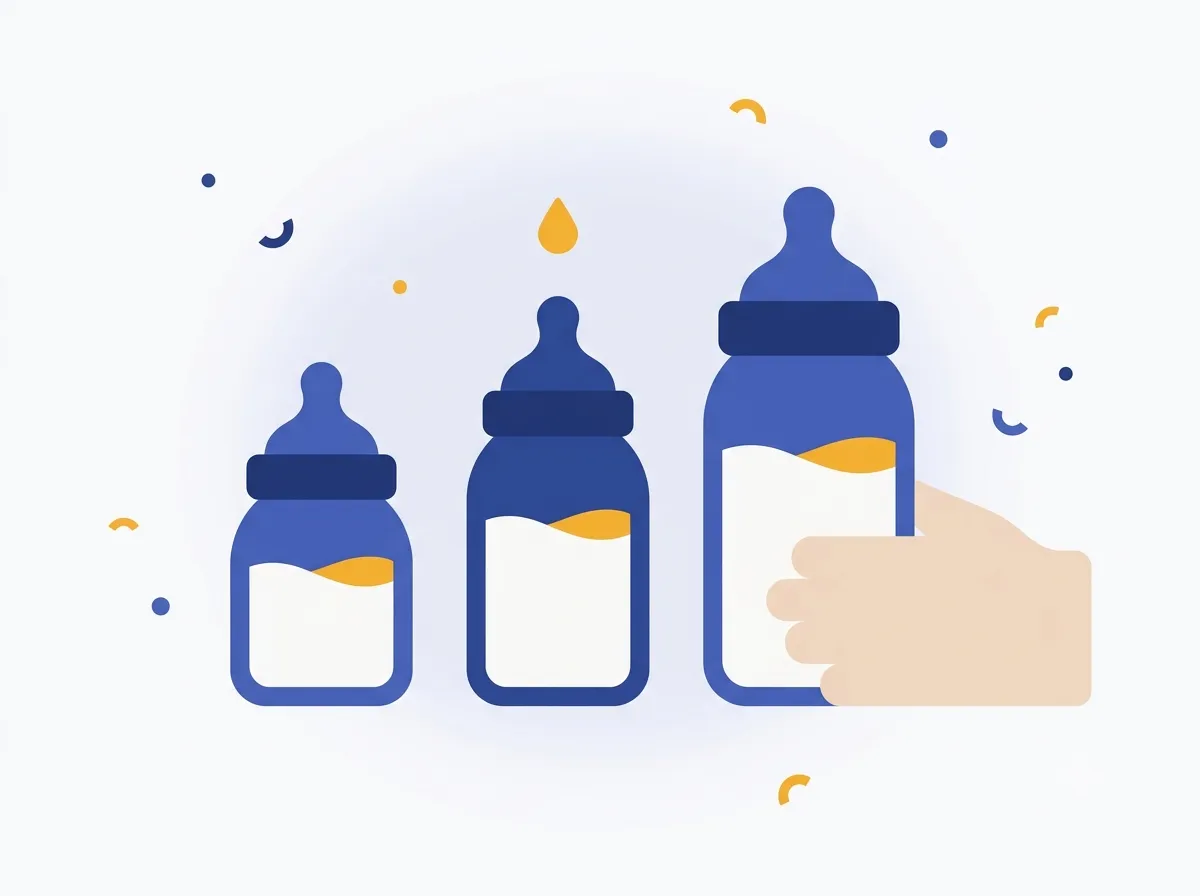
The short answer surprises most new parents: from about 1 month old, a breastfed baby settles around 25 oz a day and mostly stays there until solids start. Intake climbs steeply in the newborn weeks, then plateaus, because breast milk changes to keep pace instead of the volume going up.
That one number does a lot of work. It’s what a full day of bottles has to add up to, and it’s the figure that turns a freezer full of bags into “this many days covered.” The chart below breaks it down by age, and the sections after it explain the newborn ramp-up, the plateau, and how to tell your baby is getting enough without watching the bottle.
How much breast milk by age
These are typical ranges for healthy, full-term babies, drawn from AAP guidance. Every baby is different, so treat them as a reference point, not a target to hit.
| Baby's age | Per feeding | Per day | Feeds per day |
|---|---|---|---|
| Newborn (first days) | Colostrum, a teaspoon up to ~½ oz | Small, rising every day | 8–12 |
| 2–4 weeks | 2–3 oz | About 19–24 oz | 8–10 |
| 1–3 months | 3–4 oz | About 24–30 oz | 6–8 |
| 3–6 months | 4–5 oz | About 24–30 oz | 5–6 |
| 6–12 months | 4–6 oz | Around 24 oz, easing as solids grow | 4–5 |
Notice what the “per day” column does after the first month: it flattens. The amount per feeding creeps up, but only because feeds spread out and consolidate, not because the daily total keeps climbing. That plateau is the single most important thing to understand about feeding a breastfed baby, and the section below explains why.
Newborn: the first days and weeks
In the first few days your baby isn’t drinking milk yet, but colostrum, a concentrated first milk your body makes in tiny amounts. That’s by design. A newborn’s stomach starts out about the size of a marble, so a teaspoon or two per feed is genuinely enough on day one.
The volume then climbs fast. By the end of the first week the stomach is closer to a ping-pong ball, and by two weeks most babies take 2 to 3 oz per feed across 8 to 12 feeds a day. Feed on demand rather than on a clock in this stretch: frequent nursing or pumping is what tells your body how much milk to make, and the early weeks are when that supply gets calibrated.
If you’re pumping and the amounts look small, that’s normal for this phase and not a sign of low supply. Output ramps up alongside your baby’s stomach.
Why breastfed intake stays around 25 oz
Here’s the part that trips people up, especially anyone used to formula charts. From roughly 1 to 6 months, a baby’s daily breast milk intake stays fairly constant, averaging about 25 oz a day (most babies land somewhere in the 19 to 30 oz range).
It doesn’t keep climbing the way formula feeding guides suggest, because breast milk changes as your baby grows. Its fat and calorie content adjusts, so an older baby gets more nutrition from the same volume. Your baby grows a lot between month one and month six; the amount of milk they drink barely does.
This is why chasing an ever-bigger number is the wrong goal. If your 4-month-old takes about the same daily amount they did at 8 weeks, that’s not a stall, it’s exactly the pattern. It also makes stash planning much simpler: your daily target holds steady for months, so once you know your baby’s number, it stays useful.
How many ounces per feeding
Day to day, most parents think in bottles, not daily totals. Once feeding settles, a typical bottle is 3 to 4 oz in the early months, rising to 4 to 5 oz as feeds spread further apart. A quick rule of thumb for a specific baby: about 2 to 2.5 oz per pound of body weight per day, split across their feeds, up to a ceiling of around 32 oz.
Those per-feeding numbers are also why milk gets stored in small portions. Freezing in 2 to 4 oz bags matches a single feed, thaws faster, and means far less milk poured down the drain when a baby doesn’t finish. For how to portion and store what you pump so none of it is lost, see how long breast milk lasts at every stage.
When you do give a bottle, pace it: hold the bottle level so your baby draws milk actively rather than having it pour in, and pause partway to let them recognize fullness. A paced bottle keeps a breastfed baby from over-taking simply because a bottle flows faster than the breast.
Get your number
Turn your baby's daily intake into days of cover
Enter your baby's daily amount and your freezer total, and the breast milk stash calculator tells you how many days of feeds you have and when it runs out.
Open the stash calculator
After 6 months: when solids start
Around 6 months, solid foods enter the picture, but for the first year they’re an addition, not a replacement. Breast milk stays your baby’s main source of nutrition through 12 months; early solids are mostly practice with taste and texture.
So intake eases down gradually rather than dropping off. A 7-month-old just starting purées still takes close to their full milk amount, and the daily total only tapers as solids become real meals later in the first year. Keep milk the anchor and let food fill in around it, rather than swapping ounces for spoonfuls on a schedule.
How to tell your baby is getting enough
The bottle is the least reliable gauge, because a breastfed baby self-regulates and a nursing baby doesn’t come with a measurement. The signals that actually matter:
- Diapers. After the first week, roughly 6 or more wet diapers a day plus regular stools is the everyday sign that enough is going in.
- Weight and growth. Steady gain along their own curve, tracked at pediatrician visits, is the real confirmation, more than any single day’s ounces.
- Cues, not the clock. A baby who feeds actively, then relaxes and comes off content, is telling you they’re satisfied.
Daily amounts naturally bounce around, and one light feed or a low pumping session isn’t a problem. If wet diapers drop off, weight gain stalls, or your baby seems persistently unsatisfied, that’s the moment to check in with your pediatrician or a lactation consultant rather than adjusting ounces on your own.
Turn your baby’s number into a stash plan
Once you know your baby’s daily amount, the rest of pumping gets concrete. Planning for daycare or a return to work? Our return-to-work pumping plan turns that daily number into how much to have ready and how much to send each day, and the guide to building a stash covers pumping for a freezer cushion without overdoing it.
The daily intake is the denominator for all of it. The breast milk stash calculator takes your number and your freezer total and shows how many days you’re covered. PumpStash then keeps it live: log each bag, watch your days of cover update, and get told which milk to thaw next.
Get PumpStash for Android and let your stash do the math.
Frequently Asked Questions
How much breast milk should a newborn eat?
How much breast milk should a 3-month-old drink?
Does a breastfed baby need more milk as they get older?
How many ounces of breast milk per feeding?
How do I know my baby is getting enough breast milk?
About the author

Rebecca Harrison
Content Writer
Mother of three who has pumped, frozen, and rotated her share of milk through the back of the freezer.
Related Articles


Know Your Stash
Skip the freezer guesswork. Log every bag, see how many days of feeds your stash holds, and always thaw the oldest milk first.
Install Now